Learning to Care
«We are dedicated to ensuring all cancer patients receive unbiased, evidence-based care from appropriately trained healthcare professionals»


ESO mission
The European School of Oncology (ESO) is an independent, non-profit organisation committed to providing high-quality education and training in oncology, guided by the belief that all patients deserve equal access to competent cancer care.
Through extensive learning programmes, ESO reaches areas with the greatest need for education, both geographically and scientifically.

ESO values and principles
At the European School of Oncology, our mission is grounded in values that have remained constant since our founding in 1982. These values reflect not only what we stand for, but also the kind of impact we strive to make in the field of cancer education.
Core values

Integrity
We are committed to delivering unbiased education, free from commercial and ideological influence.

Diversity, Equity & Inclusion
We remove barriers to participation and ensure equitable access to knowledge, with a strong focus on gender equity and representation.

European Vision
Rooted in Europe’s cultural and scientific heritage, we foster cross-border collaboration in a shared commitment to advancing cancer care.
Guiding principles

Financial Independence

Multidisciplinary Approach

Unbiased, Evidence-based Education
ESO history
The European School of Oncology (ESO) was founded in Milan on 8 October 1982 by the Italian surgeon Umberto Veronesi. The idea was first presented to the European Society of Surgical Oncology during its General Assembly in Lausanne on 29 October 1981, where it received unanimous support. With the collaboration of Professors Michael Peckham and Franco Cavalli, and thanks to the first donation from Princess Laudomia Del Drago, ESO was established as an independent, non‑profit institution dedicated to advancing cancer education across Europe.
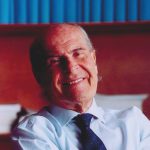
Milan
Umberto
Veronesi
Founder

Rome
Laudomia
Del Drago
Honorary President
Other leading oncologists played a key role in the founding of ESO:
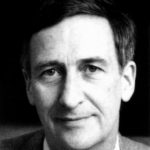
United Kingdom
Sir Michael Peckham
Pioneer of mantle field radiation therapy.
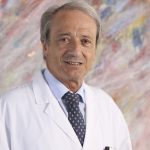
Switzerland
Franco Cavalli
Haematologist who helped establish medical oncology as a recognised discipline in Europe and founding member of the European Society for Medical Oncology.
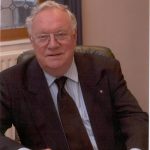
Belgium
Louis Denis
Key figure behind the European Organisation for Research and Treatment of Cancer (EORTC).
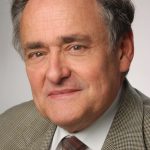
Netherlands
Bob Pinedo
Early advocate of translational research and co-editor of Cancer Chemotherapy.
Over the years, ESO has benefited from the expertise and dedication of leading oncology professionals who have shaped its educational vision. Among them, Prof. Nicholas Pavlidis has played a pivotal role. His long-standing commitment has not only contributed to the development of ESO’s educational programmes but also to the dissemination of its mission through scientific and editorial work, including the publication of articles that highlight the School’s educational model and impact in oncology.
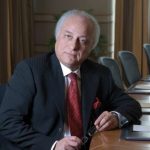
Ioannina
Nicholas Pavlidis
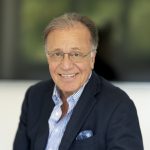
Milan
Alberto Costa
CEO
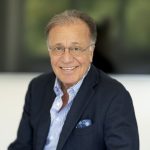
Since its establishment, ESO has been led by Dr Alberto Costa. Initially an assistant to Professor Veronesi at the Istituto Tumori in Milan, Dr Costa is the Chief Executive Officer of ESO, continuing to uphold the principles and values dear to Professor Veronesi.
Today, ESO remains dedicated to its mission, supported by an international scientific committee, advisory board, dedicated staff, and global partners committed to excellence in oncology education.